Spanish-Style Sardines with a Twist

I’ve been busy playing around with my new gallery that I’m not done yet on checking out LP15‘s recipes about recycled food. (Oh please do check it out when you have time; will upload more Beijing photos.) I’ve been thinking about cooking Spanish-style sardines but ended up making my own experiment. I didn’t have pickles and carrots at that time and chili isn’t always a good idea with my boy, so I concocted a recipe with ginger and pork fat. The ginger gives it a kick but may be omitted if undesired; chili I think is still the best. The … Continue reading Spanish-Style Sardines with a Twist

Picadillo Torta

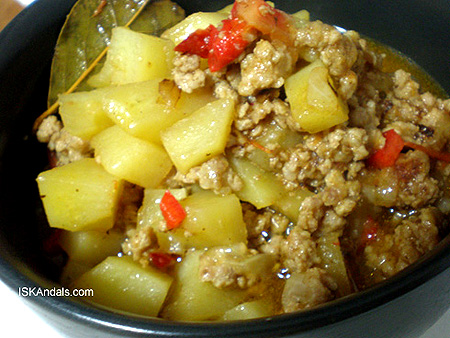
Lasang Pinoy 15: Giniling Galore

LP15: Recycled, Reloaded

What do you do with leftover food? Everyday cooking has made me a bit of an expert in calculating how much we can consume and which dish is a hit that I seldom have leftovers. But of course it doesn’t happen all the time. Fine. Yet I don’t think I could throw away a good and decent portion of food without feeling guilty for the hungry street children and leftovers aren’t as appetizing the second time around so a makeover is usually the case. One way of being creative is to camouflage it as an ingredient to a new dish. Usually I cut pieces of meat (like adobo) or vegetables, and use them as ingredient to fried rice the next morning for breakfast. A stir-fry vegetable dish could be toppings to fried noodles. I think of fish balls when there is leftover steamed fish. What’s left of sinaing na tulingan can be made into tuna pasta or tuna omelet. Don’t be surprised that I even made something out of take-away beef rendang!

Continue reading “Lasang Pinoy 15: Giniling Galore”

iskandals-paella.gif

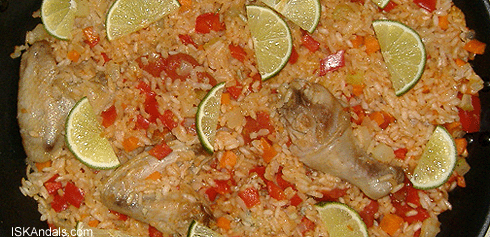
Lasang Pinoy 15: Erwin’s Paella


Erwin Ines is this blog’s reader/commenter who never fails to give great cooking tips. I invited him as a guest blogger and I am ecstatic that he agrees to contribute this entry for the 15th round of Lasang Pinoy. A Credit and Financial Analyst in Manila, Erwin migrated to Canada in 2003 and made a drastic career change a year and a half later. With his passion for food and love for cooking, he decided to take a Continuing Education Chef Training Course at George Brown College’s Chef School in Toronto. He currently works as a cook in an Italian-American restaurant.

Strange Love

Ever wondered why Filipino cooking has never transcended into the realm of fine dining? In Manila, fine and casual dining has evolved from 15 to 25 years ago because of several obvious factors: economy, competition, creativity, the need for newer and fresher concepts and globalization. These liberal and presented juggernauts of world politics and common belief of almost total to complete improvement of self as well as self-respect and political parody have brought Filipino taste to majestic heights. However, this is only true for Manila, the city I have abandoned and loved. How about across the Atlantic? Have Filipinos realized how far Pinoy food has competed against their counterparts? South Asian, Thai and West Indian Cuisines have flourished, expanded, mutated and sprouted from all over, releasing their exotic and Caribbean tastes and spices. Indeed, they have become known and popular through these years. Spices such as All Spice, Garam Masala, Curry Powder (in paste & powder forms), Jerk, Coriander, and Cumin have become a mainstay in many kitchens nowadays. They have also been praised by Professional Chefs who have in time included some noticeable, succinct flavours into their menu-fusion.

Sadly, Pinoy food has only reached a certain level of appreciation and has never soared to a new level or new heights. Did you ever wonder why Pinoy cuisine, despite the never-ending and continuous flooding and flocking of immigrants around North America, have never transcended into the realm of true, exquisite, fresh, and flavourful cooking? In my short stint here, I have discovered one reason for this shortcoming: SHORT-CUTS. I feel, for many involved in cooking as a hobby, more so as a profession, and based on my kitchen experiences, Pinoys tend to cut corners and alleviate from what is right and proper or to what should be to what NOT. For example, Italians generally know how to make healthy, nurturing food for the family at a short time without making sacrifices on many ingredients. The key to good food, in their case, is freshness.

Continue reading “Lasang Pinoy 15: Erwin’s Paella”

iska-braisedpata1.jpg

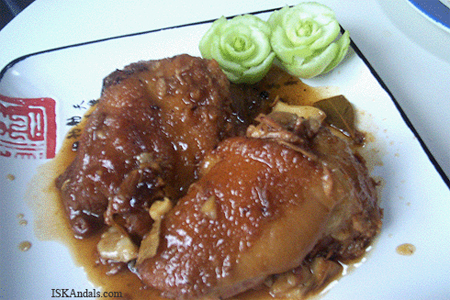
Braised Boneless Pata

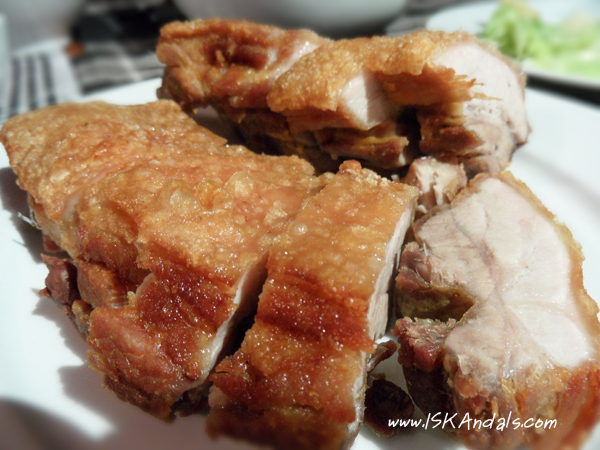
I could have easily call this dish humba or even hamonadong pata but certain ingredients are missing such as bean curd, tausi (salted black beans), or pineapple and I don’t intend to confuse my readers with regards to the Philippine cuisine. As I am already perplexed with names and what ingredient goes into what recipe, I choose to simply call it – braised boneless pata. With a decent piece of pork leg and staple pantry items, here’s another melt-in-your-mouth dish.

Continue reading “Braised Boneless Pata”

bistek.jpg

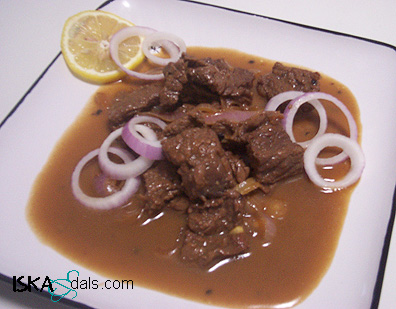
Bistek

For some reason bistek is commonly known as the Philippine version of the western-style beef steak. As for me I couldn’t find any similarity unless of course other people’s bistek is different from what I learnt from my folks. Nevertheless I love this dish – saucy, tangy what with the kalamansi flavor and oh so appetizing I couldn’t stop getting myself few more cups of extra rice to go with it.

The good thing about this Pinoy steak is that you don’t have to buy the most expensive parts like those from the loin. Not everyone can afford it anyway so the much less expensive and less tender but usually more flavorful are just fine. Cut the beef thinly and always remember to pound each slice lightly with the back of a kitchen knife to tenderize, and of course a little over than just few minutes of cooking time. It’s also a famous carinderia recipe.

Continue reading “Bistek”

cicken-marinate.gif

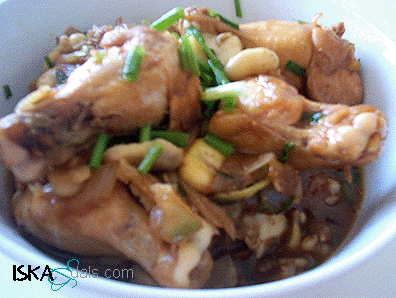
A Simple Chinese Chicken Recipe

Yeah it’s been a while I know. I’ve been really busy meeting submission deadlines, a larger than usual pile on my table that I only had time to write about Lasang Pinoy. And of course a lot of extracurricular activities not to mention the amount of time I spent updating the links in this blog.

So let’s get back to what I think I do best… whipping up some quick recipes with my limited time and whatever I find inside the pantry. Ahh I found this bottle of Chinese marinade. What’s in it? Only the Chinese knows but I spent few renminbi for it. Here’s what I did with it on chicken wings and few spices.

Continue reading “A Simple Chinese Chicken Recipe”

iskandals-munggo.jpg

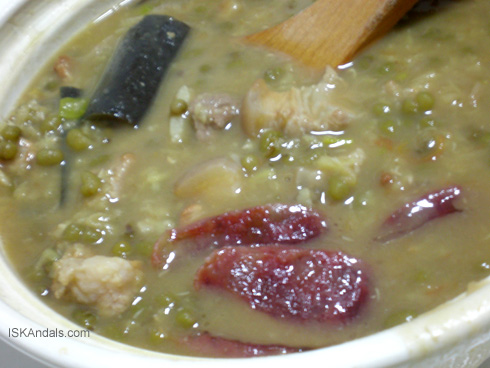
Munggo (Guisado or Soup)

Creamy or soupy, munggo (mung bean) is definitely Pinoy soul food. Cold rainy days and we just love it with fried fish. Summertime and it is still munggo that we crave for. There are also many ways to enjoy it as it could be paired with just about anything – from fried bangus (milkfish) or tilapia and tuyo (dried salted fish) to adobong manok at baboy. You may also add in hibi (dried shrimps), use pata (pork leg) for a flavorful broth or just plain monggo soup sprinkled with chicharon pork cracklings. And just like sinigang na baboy, the veggies I include in it depends on what’s available. Back home, talbos ng ampalaya (bitter gourd tendrils) is a runaway favorite, even dahon ng malunggay (moringa leaves). In Beijing, I can only play around with talong, sitaw and ampalaya (string beans, eggplant and bitter gourd).


Mix it with home-made chicharon. . .


Top it with fried daing bought from a tiangge (flea market) at the Worker’s Stadium that tastes exactly like it’s from Manila.


As A likes it, creamy with Chinese chorizo. Oh well I never tried that before until now and it turned out surprisingly delicious!

Continue reading “Munggo (Guisado or Soup)”

Siomai and Fried Dumplings

Whenever we crave for siomai or dim sum, we go to our favorite Cantonese restaurant. Not so fond of Beijing jiaozi (Northern Chinese dumplings) so I was so ecstatic to find Karen’s famous basic siomai recipe. Go check it out. I followed what was written there (except I didn’t have singkamas) including making my own wrappers. Here’s my 1st attempt – not perfect (yet) but I’m posting it anyway. Those in the photos taste good! How come I find them not perfect? 1. I don’t think they look good. I need to know how to wrap them nicely. Did few … Continue reading Siomai and Fried Dumplings

Upo Guisado with Shredded Daing

I’ve been cooking stir-fry dishes Chinese style for so long I miss the way mom does it – gulay guisado Pinoy-style (Philippine-style sauteed vegetables). This takes additional minutes of cooking time. Meat isn’t cooked over high heat for few minutes or so. Instead, cooked with its own juice over low heat until it renders fat. Here is ginisang upo with daing (sauteed bottle gourd with dried fish) – one of those simple, easy-to-cook, everyday Pinoy dishes.

Continue reading “Upo Guisado with Shredded Daing”

Mom’s Soupy Adobong Baboy

I remember mom’s adobo is devoid of vegetables and always dry and dark with soy sauce. Yet last December, she surprised me with her new version – really soupy and with potatoes. Our family loves soup in meals so a soup dish like nilaga, tinola or sinigang is always a hit. This soupy version of adobo didn’t fail. After all, pouring soup over rice is in fact a Pinoy custom. Ingredients: 1/2 kilo pork (w/ fat), cut into chunks 2 tbsp crushed garlic 2 medium-sized potatoes, cut into chunks 1/2 cup vinegar 1/2 cup soy sauce salt and peppercorns 2 … Continue reading Mom’s Soupy Adobong Baboy

Chicken Hamonado with Green Raisins

Quite busy for weeks I didn’t have time to blog so here’s another easy recipe. It’s basically the same as my 1st chicken hamonado post but instead of fruit juice, I used what was left of our raisin snack. Ingredients: 2 large chicken thigh/leg 1 tbsp. of crushed garlic 1 onion, chopped 1/2 cup soy sauce 1/2 cup Chinese green raisins 2 tbsp. of sugar salt & crushed peppercorns leak, julienned Mix the above ingredients in a pot. Pour enough water to cover the chicken and simmer until the chicken is cooked and the sauce is thick. Continue reading Chicken Hamonado with Green Raisins